What we have learned building, migrating and running software for companies in Switzerland and the wider DACH region.
48 articles

Most enterprise AI pilots never reach production. The six blockers Swiss and DACH mid-market companies run into, and what actually resolves each one.

EU AI Act obligations are live. What counts as high-risk, what GPAI adds, and a 90-day readiness path for CTOs in Switzerland, Germany and Austria.
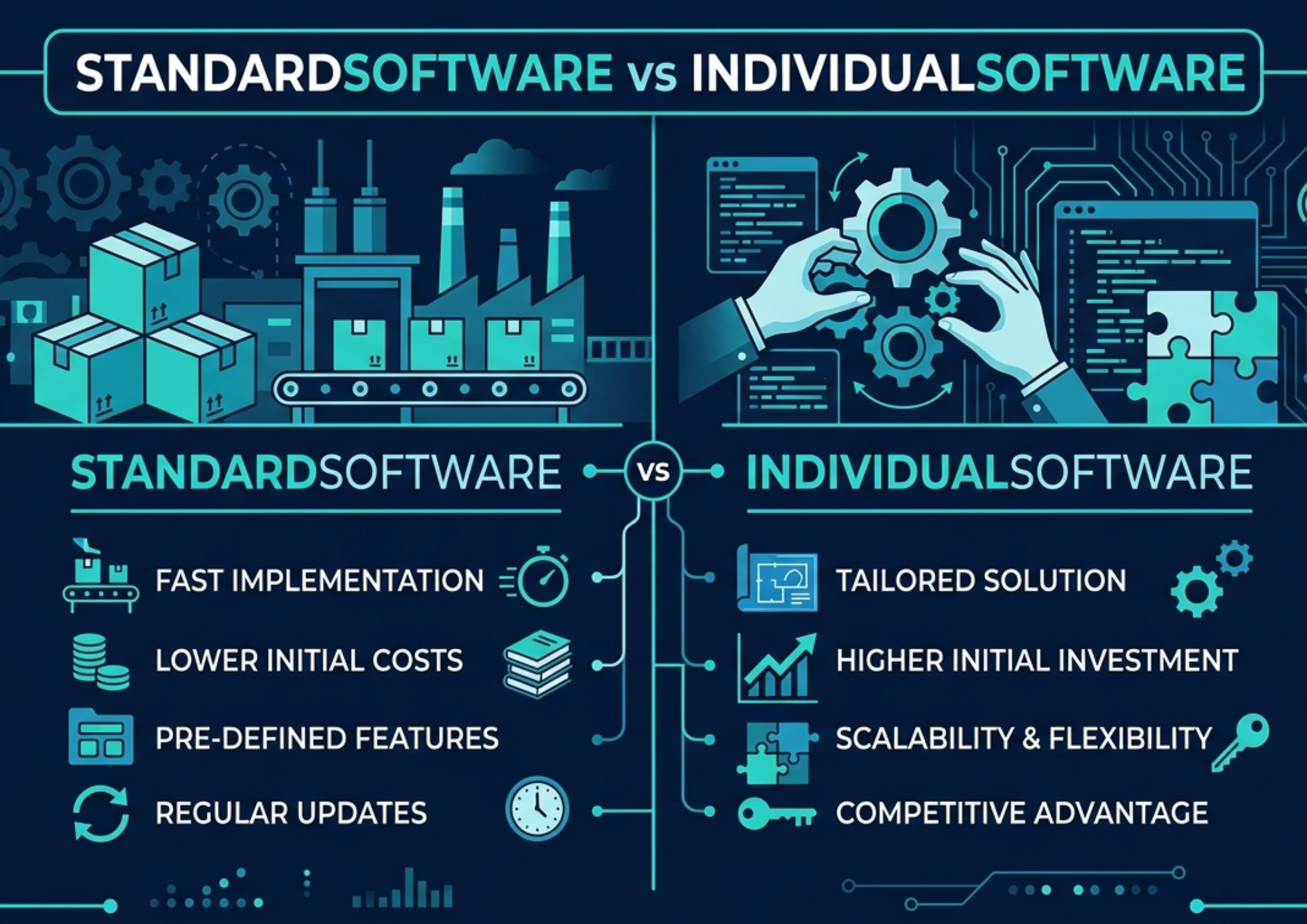
When standard software stops fitting: four signs a Swiss mid-market company has outgrown it, and how to decide what to build, configure or keep buying.

Clutch has listed Kansoft among its 100 Fastest Growing Companies for 2026. What the ranking measures, and what it does and does not tell a DACH buyer.

A migration plan mid-size DACH companies can actually execute: assess, sequence, prove the landing zone, migrate in waves, then optimise — with costs owned.

AI projects stall on data, not models. What a data foundation needs — integration, master data, lineage, access control — before AI is worth starting.

Transformation programmes stall on the same six data gaps: quality, silos, governance, security, integration and skills. How to find them before they cost you.

AI outcomes are set by five leadership decisions, not by model choice: operating model, accountability, trust engineering, data reality and risk design.

What changed in enterprise transformation: strategy tied to outcomes, architecture over tooling, data for decisions, AI in production, and governance by design.

How to replace a legacy system while it keeps running: strangler-fig migration, reversible steps, and the seven principles that keep the business online.

The migration mistakes that cost Swiss and DACH mid-market companies most — over-provisioning, missing baselines, unowned cost — and how to avoid each.
An honest comparison for Swiss SMEs: total cost over five years, operational trade-offs, and where revDSG and FINMA actually constrain the choice.

A maturity model for GCCs: the four stages from staffing to co-creation, the governance that makes each stage work, and where most centres stall.
The DACH market modernises incrementally rather than by replacement. Why hybrid cloud fits that preference, and what the incremental path actually returns.

Why Swiss companies transform slowly and land better: the maturity paradox, data sovereignty as an advantage, and a modernisation roadmap that survives audit.
A digital strategy that survives a board review: what scalability really constrains, moving from intuition to evidence, and forecasting before you commit.

Cloud spend rises faster than usage for a reason. The four levers that actually move it, the governance that keeps it moved, and what to ask your CTO.
How to justify engineering spend: the equation, what counts as a return, which intangibles are defensible, and measurement that survives scrutiny.

Swiss companies are in the cloud. Many are not getting the return. Five lessons on overspending, data residency and building a roadmap ROI can follow.
A practical migration roadmap for European SMEs: capex to opex, how to calculate TCO, where pay-as-you-go helps, and the sequence that keeps costs predictable.

Engineering spend from the finance seat: what to benchmark in DACH, why hybrid capacity changes the arithmetic, and the levers a CFO can pull.

The three constraints Swiss CEOs actually face: where capital is available, how to compete for scarce talent, and which technology decisions hold growth back.

Seven costs that appear when a DACH company scales and never show on an infrastructure invoice: process debt, compliance load, attack surface and coordination.

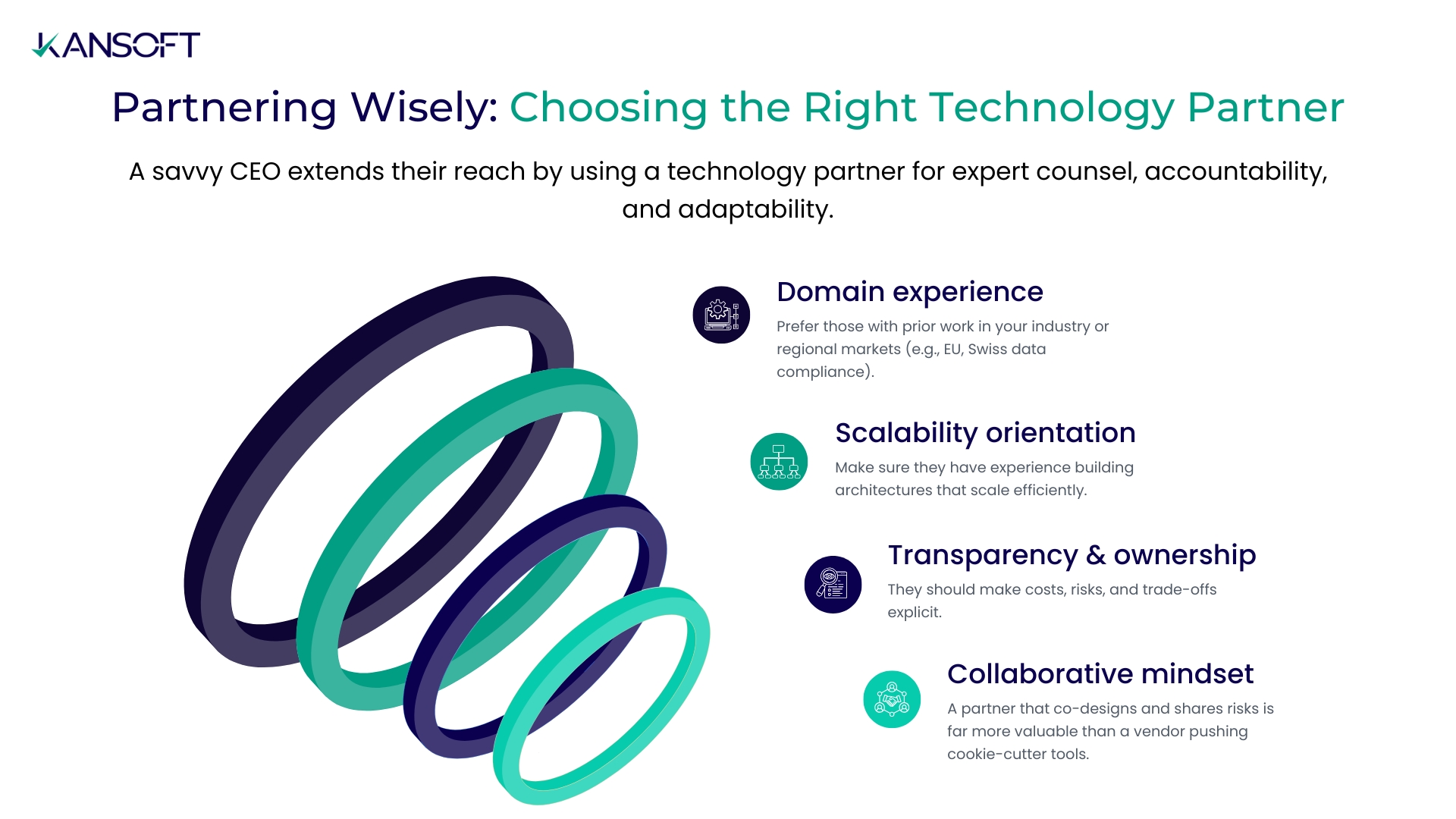
Seven criteria that separate a supplier from a partner for Swiss tech companies: DACH experience, technical depth, compliance posture, and how exit is handled.

What a Swiss engineering hire actually costs once recruitment, ramp-up and idle capacity are counted — and how a remote team changes the arithmetic.

The decisions a migration roadmap has to settle before any workload moves: goals, cloud model, adoption framework and how to segment workloads into waves.

The practitioner view of FinOps for Swiss SMEs: where the waste actually sits, which practices pay back fastest, and how to budget a variable bill.

A readiness check for Swiss companies: what is driving adoption now, the compliance steps that come before architecture, and where hybrid and edge fit.

Hiring in Switzerland is slow. Five ways to add engineering capacity without waiting two quarters, and the metrics that tell you whether scaling is working.

Why most executive dashboards go unread, what belongs on one, and the data-residency questions a Swiss company has to settle before choosing a tool.
Which agile practices survive contact with Swiss delivery: hybrid frameworks, DevSecOps, the metrics worth tracking, and why culture outlasts the ceremony.

How to pick a SaaS stack you can still hire for and afford in three years: languages, managed backends, low-code limits and Swiss data-residency constraints.
What a migration costs a Swiss startup, the three challenges that hit small teams hardest, and how to judge the return when runway is the real constraint.

Which technology trends actually change a Swiss company's decisions: AI moving to production, cloud-native defaults, rising compliance load and data culture.

The operational prep before a migration starts: application inventory, the pre-flight checklist, and the infrastructure plan you need signed off.

Swiss hiring cycles run five to six months. A three-step method for adding engineering capacity faster, and how to judge a flexible partner properly.

Resilience is a set of tested capabilities, not a platform: recovery objectives that come from the business, real disaster recovery, and compliance by design.

In a regulated device business the architecture decisions are compliance decisions. What MDR, IEC 62304 and interoperability require before the first release.

Where digital effort actually pays in a device business: AI in design, compliance as a system, interoperability, security controls and predictive service.

The roles an AI team actually needs, why data engineering outweighs modelling, and the non-technical skills that decide whether anything reaches production.

Tangled control flow, god objects, copy-paste logic, weak version control and premature optimisation — why each persists and what removes it for good.

Where AI genuinely reduces IT cost, what strategic sourcing means beyond rate arbitrage, and how to tell a structural saving from a temporary one.

How to keep quality when delivery is distributed: defining done before work starts, where automation pays, and the review loop that catches defects early.
The management practices that decide whether a distributed team works: explicit objectives, decision rights written down, and metrics that are not headcount.

Define the decision before the technology, evaluate on evidence rather than claims, and structure the engagement so capability transfers to you.

Most delivery problems live in the gaps between phases. What end-to-end ownership changes, where it is the wrong model, and how to judge it.

Advanced Power BI techniques worth the effort: encoding comparison, drill paths that follow a question, and the design choices that make a report get used.

What Power BI is good at, where it stops being the right tool, how the architecture fits together, and the data-residency questions to settle before rollout.
No articles match that selection.
